During a meeting in the Oval Office on March 19, 2026, President Trump referenced Pearl Harbor while speaking alongside Japanese Prime Minister Sanae Takaichi. The discussion arose when a Japanese reporter asked why the U.S. did not alert allies, including Japan, ahead of the February 28 military strike on Iran.
President Trump responded that the administration chose not to inform any nation beforehand to maintain the element of surprise.
He said, “Well one thing, you don’t want to signal too much, you know? When we go in, we went in very hard. And we didn’t tell anyone about it because we wanted surprise. Who knows better about surprise than Japan? OK? Why didn’t you tell me about Pearl Harbor? OK? Right?”
He continued, emphasizing the strategy behind the decision, stating, “We had to surprise them, and we did. … If I go and tell everybody about it, there’s no longer a surprise.”
Reactions and Context
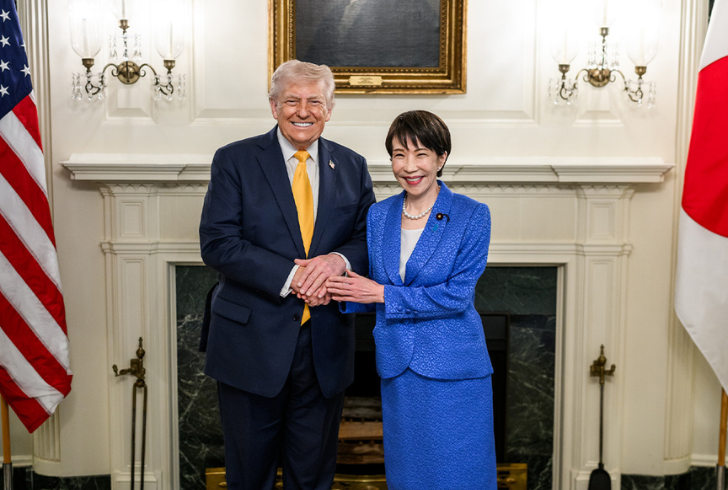
Instagram | whitehouse | In a meeting with PM Takaichi, Trump referenced Pearl Harbor when questioned about the U.S. strike on Iran.
Prime Minister Takaichi appeared momentarily taken aback by the comparison, her eyes widening slightly. While she speaks some English, she mainly relied on a translator during the event. Later, the White House shared a photo of the two leaders together, both giving thumbs-up gestures.
The United States and Japan have been formal allies since 1952, though historical tensions from World War II remained for decades. The Pearl Harbor attack of December 7, 1941, in which over 2,400 Americans were killed, remains a sensitive chapter in their shared history.
In 2016, former Japanese Prime Minister Shinzo Abe visited the Pearl Harbor memorial alongside then-President Barack Obama. Abe expressed “sincere and everlasting condolences” to the Americans who lost their lives and described being “rendered entirely speechless” by the scale of the tragedy.
He acknowledged the alliance that Japan and the U.S. now share, stating, “Japan and the United States, which fought a fierce war that will go down in the annals of human history, have become allies with strong ties rarely found anywhere in history.”
Historical Ties and Leadership Connections
President Trump had a notably close relationship with former Prime Minister Shinzo Abe, who was tragically assassinated in 2022 while giving a speech in Japan.
Trump’s reference to Pearl Harbor during the Oval Office meeting with Prime Minister Sanae Takaichi served as a strategic analogy, emphasizing the importance of surprise in military operations.
The exchange highlighted the delicate balance between maintaining alliance trust and preserving operational secrecy in global conflicts. Historical events like Pearl Harbor continue to influence modern diplomacy, shaping discussions of strategy, trust, and decision-making.
Today, the U.S. and Japan navigate these complex dynamics while sustaining a partnership central to regional stability and international relations.